If you have ever embarked on a multi-day trek or a challenging weekend scramble, you know that hikers often obsess over their boots while entirely neglecting the foundation of foot health. As an outdoor gear tester who has logged thousands of miles across diverse terrains, I can tell you that a poorly designed pair of socks will turn a scenic route into a blister-filled nightmare, no matter how expensive your boots are. That is why taking the time to research and invest in the best hiking socks is not just a luxury—it is a critical safety and comfort requirement for any serious outdoor enthusiast.
Finding the perfect footwear base layer means navigating a confusing market of materials, thicknesses, and marketing claims. To help you build the ultimate trail kit, this guide will break down the exact anatomy of high-performance footwear, the science of material blends, and how to keep your feet cozy and protected in all conditions.
What Makes the Best Hiking Socks Actually Work?
The secret to premium trail socks lies in a delicate balance of moisture management, friction reduction, and targeted padding. While traditional cotton holds onto sweat and causes severe friction, modern outdoor hosiery is engineered like high-tech equipment.
Here is what you should look for when evaluating top-tier trekking gear:
- Moisture Wicking: Your feet sweat heavily when climbing elevations. The ideal trekking socks actively pull moisture away from your skin to the outer surface of the fabric where it can evaporate.
- Anatomical Fit: A generic tube shape will bunch up at the heel and toes, creating hotspots. High-performance trail wear contours perfectly to the left and right foot, anchoring securely around the instep.
- Impact Protection: Downhill descents put immense pressure on your toes and heels. Strategic cushioning absorbs shock and delays foot fatigue during high-mileage days.
The Secret Angle: Why 100% Wool Isn’t Always the Answer
Many traditionalists argue that pure merino wool is the only way to go. However, from a textile engineering standpoint, 100% wool has a fatal flaw: durability. Pure wool breaks down quickly under high friction and loses its elastic memory, leading to sagging and bagging.
The industry’s most advanced solution is Hybrid Blending. By combining natural temperature-regulating fibers with advanced synthetics, you get the absolute best of both worlds: the warmth and breathability of nature, backed by the structural resilience of modern science.
Us vs. Ordinary Trail Socks: The Competitive Advantage
How does a scientifically engineered blend stack up against standard market options? Here is a breakdown of why our approach to outdoor footwear outperforms generic alternatives:
| Feature | Ordinary Outdoor Socks | Our Advanced Engineered Blend |
| Material | 100% Wool (Prone to holes) or 100% Synthetic (Poor odor control) | 30% Wool, 35% Superfine Acrylic, 22% Eco-friendly Nylon, 10% Polyester, 3% Spandex |
| Arch Support | Basic elastic, loses shape after washing | Dynamic Arch Support with a dedicated high-elasticity band for targeted compression |
| Cushioning | Uniform thickness, causing boots to feel tight | Medium-Intensity Impact Cushioning (Half terry) only where you need shock absorption |
| Durability | Wears thin at the heel and toe quickly | Reinforced heel and toe designed for rugged, long-term trail use |
Meet Your Feet’s New Best Friend
If you are looking for footwear specifically engineered to tackle changing elevations and unpredictable weather, we have built the exact product to meet those demands.

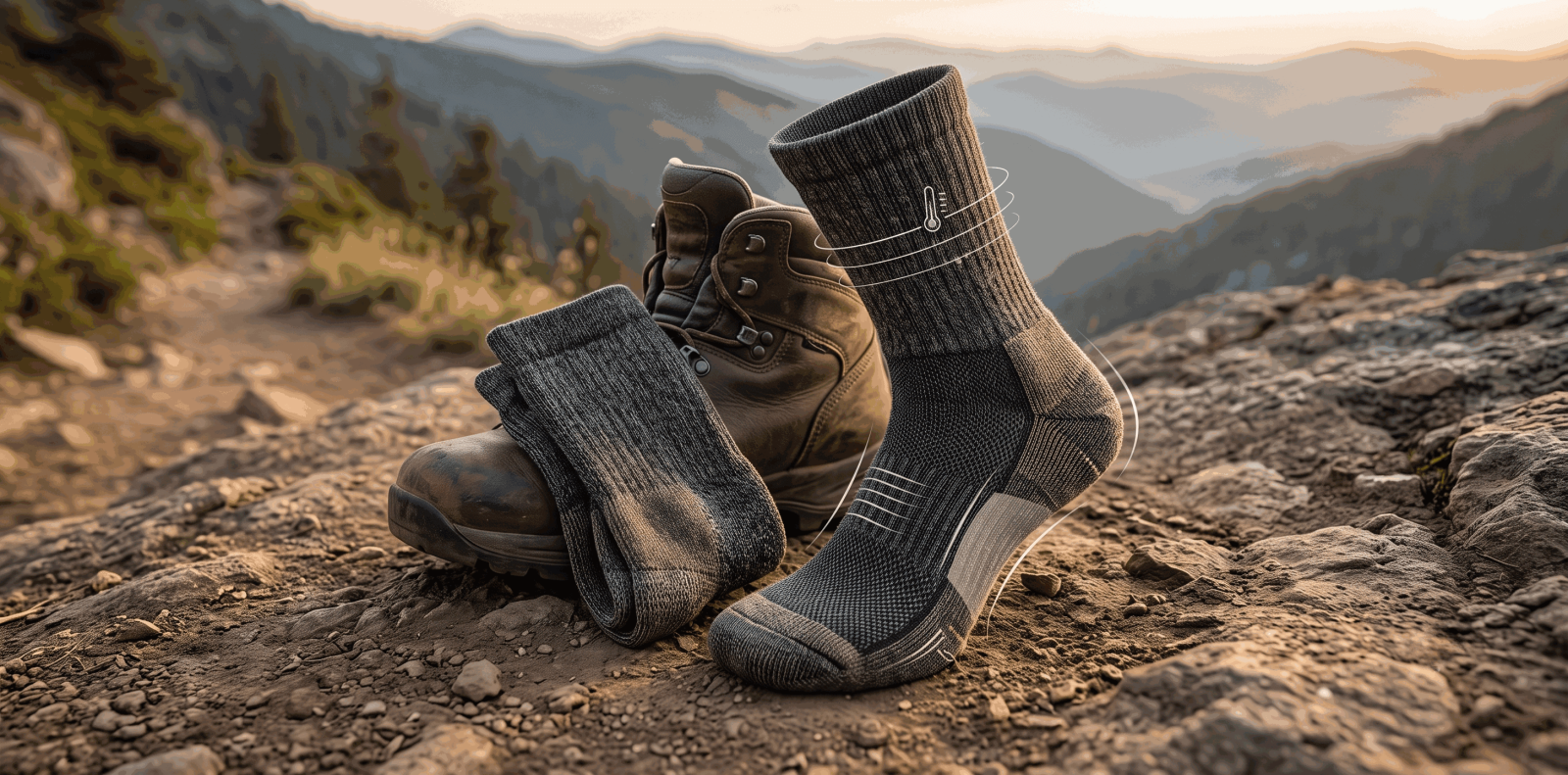
Men’s Wool Thermal Outdoor Hiking Mid-Calf Socks
Designed with a special blend of warmer wool fabric, these mid-calf companions regulate temperature to keep your feet cozy in all conditions—whether you are facing a frosty morning ascent or a damp, breezy valley.
- Temperature Regulating: The 30% wool base locks in heat while maintaining perfect breathability, preventing the dreaded “clammy” feeling.
- Dynamic Arch Support: We integrated a dedicated high-elasticity band that wraps around the arch, providing targeted compression to fight foot fatigue.
- Medium-Intensity Impact Cushioning: Featuring a half-terry knit, they offer maximum shock absorption on heavy strikes without adding unnecessary bulk to your boots.
- Rugged Construction: Reinforced heel and toe zones ensure high durability mile after mile.
- Ideal For: Hiking | Trekking | Winter Backpacking
👉 [Click Here to Shop the Men’s Wool Thermal Outdoor Hiking Socks]
Final Thoughts for the Trail Ahead
Your feet are your ultimate vehicle in the great outdoors. Never underestimate the power of dynamic support, reinforced knitting, and smart material blends. By upgrading your base layers and tracking down the best hiking socks for your specific adventure, you will eliminate blisters, reduce fatigue, and finally be able to focus on the breathtaking views instead of your aching feet.
🧠 Frequently Asked Questions (FAQ)
Not necessarily. While thick cushioning provides warmth and impact protection, overly thick socks can alter the fit of your hiking boots, restricting circulation and actually making your feet colder. A medium-intensity, half-terry cushion offers the perfect balance of shock absorption and boot compatibility.
Blisters are caused by heat, moisture, and friction. If you wear cotton or worn-out synthetics, the fabric holds moisture against your skin and rubs. Upgrading to a moisture-wicking wool-acrylic blend with a snug, dynamic arch fit will eliminate the friction that causes blisters.
To preserve the elasticity and wool fibers, wash your trekking footwear inside out in cold or warm water on a gentle cycle. Avoid fabric softeners (which coat the fibers and ruin moisture-wicking properties) and always air dry them or tumble dry on the lowest possible heat setting.